ما هو الذكاء الاصطناعي الطرفي (Edge AI)؟ دليل مبسط لغير المتخصصين تقنياً
أبرز النقاط
- يعمل الذكاء الاصطناعي الطرفي على تشغيل تقنيات الذكاء الاصطناعي مباشرة على الأجهزة المحلية، بدلاً من إرسال البيانات إلى خادم سحابي بعيد.
- بالنسبة للبيئات المصنفة أو المعزولة (Air-gapped) أو المقيدة قضائياً، غالباً ما يكون الذكاء الاصطناعي الطرفي ليس الخيار المفضل فحسب، بل الخيار الوحيد المتوافق، حيث قد لا يُسمح بالمعالجة السحابية على الإطلاق.
- يوفر سرعة في الوقت الفعلي، وموثوقية في حالة عدم الاتصال، والأهم من ذلك بالنسبة للبيئات السيادية والمنظمة، تحكماً أكبر في البيانات ويقيناً قضائياً.
- تشمل التطبيقات الواقعية اتصالات ساحة المعركة، وأنظمة التحكم الإشرافي وتحصيل البيانات (SCADA) وأنظمة التكنولوجيا التشغيلية (OT) في قطاعات الطاقة والمرافق، وأمن الحدود، والاستجابة للطوارئ.
- للذكاء الاصطناعي الطرفي مقايضات - بما في ذلك محدودية قوة المعالجة وتكاليف الأجهزة - ولهذا السبب تستخدمه العديد من المؤسسات جنباً إلى جنب مع الذكاء الاصطناعي السحابي، وليس كبديل له، لأعباء العمل الأقل حساسية.
إذا كنت تقيّم نظاماً مدعوماً بالذكاء الاصطناعي لوكالة حكومية، أو برنامج دفاعي، أو مشغل بنية تحتية حيوية، فمن المحتمل أنك واجهت مصطلح "الذكاء الاصطناعي الطرفي" في إيجاز الموردين أو وثائق المشتريات دون فهم واضح لما يغيره فعلياً في وضع الأمان. هذه الفجوة مهمة، لأن الإجابة تحدد ما إذا كان يمكن اعتماد النظام للعمل على شبكة مصنفة أم لا.
الذكاء الاصطناعي الطرفي هو ذكاء اصطناعي يعمل مباشرة على جهاز محلي — جهاز طرفي ميداني، أو مستشعر في شبكة طاقة، أو حاسوب على متن مركبة، أو جهاز محمول داخل منشأة آمنة — بدلاً من إرسال البيانات إلى خادم سحابي بعيد للمعالجة. يشير مصطلح "الطرفي" إلى الحافة الخارجية للشبكة، أي الجهاز الأقرب للمكان الذي تُنشأ فيه البيانات فعلياً، على عكس مركز البيانات المركزي الذي قد يقع خارج نطاق اختصاصك، أو خارج سيطرتك، أو خارج حدود نظام معزول تماماً.
يشرح هذا الدليل ماهية الذكاء الاصطناعي الطرفي، وكيف يعمل، ولماذا يعد مهماً بشكل خاص للمؤسسات التي تعمل بموجب متطلبات التصنيف، أو تفويضات سيادة البيانات، أو متطلبات التشغيل المستمر للأنظمة الحيوية، وما هي الأسئلة التي يجب طرحها قبل الموافقة على نشر الذكاء الاصطناعي الطرفي.
ما هو الذكاء الاصطناعي الطرفي؟ تعريف مبسط
يجمع الذكاء الاصطناعي الطرفي بين فكرتين: الحوسبة الطرفية و الذكاء الاصطناعي.
- الحوسبة الطرفية تعني معالجة البيانات بالقرب من مكان توليدها، بدلاً من إرسالها إلى خادم بعيد. يصف المعهد الوطني للمعايير والتقنية (NIST) في الولايات المتحدة الحوسبة الطرفية بأنها طبقة الشبكة التي تشمل الأجهزة الطرفية ومستخدميها، مما يوفر قدرة حوسبة محلية مباشرة على مستشعر أو عداد أو أي جهاز آخر يمكن الوصول إليه عبر الشبكة — انظر المنشور الخاص رقم 500-325 الصادر عن المعهد الوطني للمعايير والتقنية (NIST)، النموذج المفاهيمي لحوسبة الضباب.
- الذكاء الاصطناعي يعني استخدام نماذج مدربة للتعرف على الأنماط، أو إجراء تنبؤات، أو إنشاء مخرجات من تلك البيانات.
عند دمجهما معاً، فإن الذكاء الاصطناعي الطرفي يعني: تشغيل نموذج ذكاء اصطناعي على الجهاز نفسه، بحيث تتم عملية "التفكير" محلياً بدلاً من السحابة.
تخيل الفرق على هذا النحو: نظام الذكاء الاصطناعي السحابي يشبه الاتصال بخبير في مدينة أخرى في كل مرة تحتاج فيها إلى إجابة؛ حيث ترسل سؤالك، وتنتظر الرد، ثم تتلقى الإجابة.
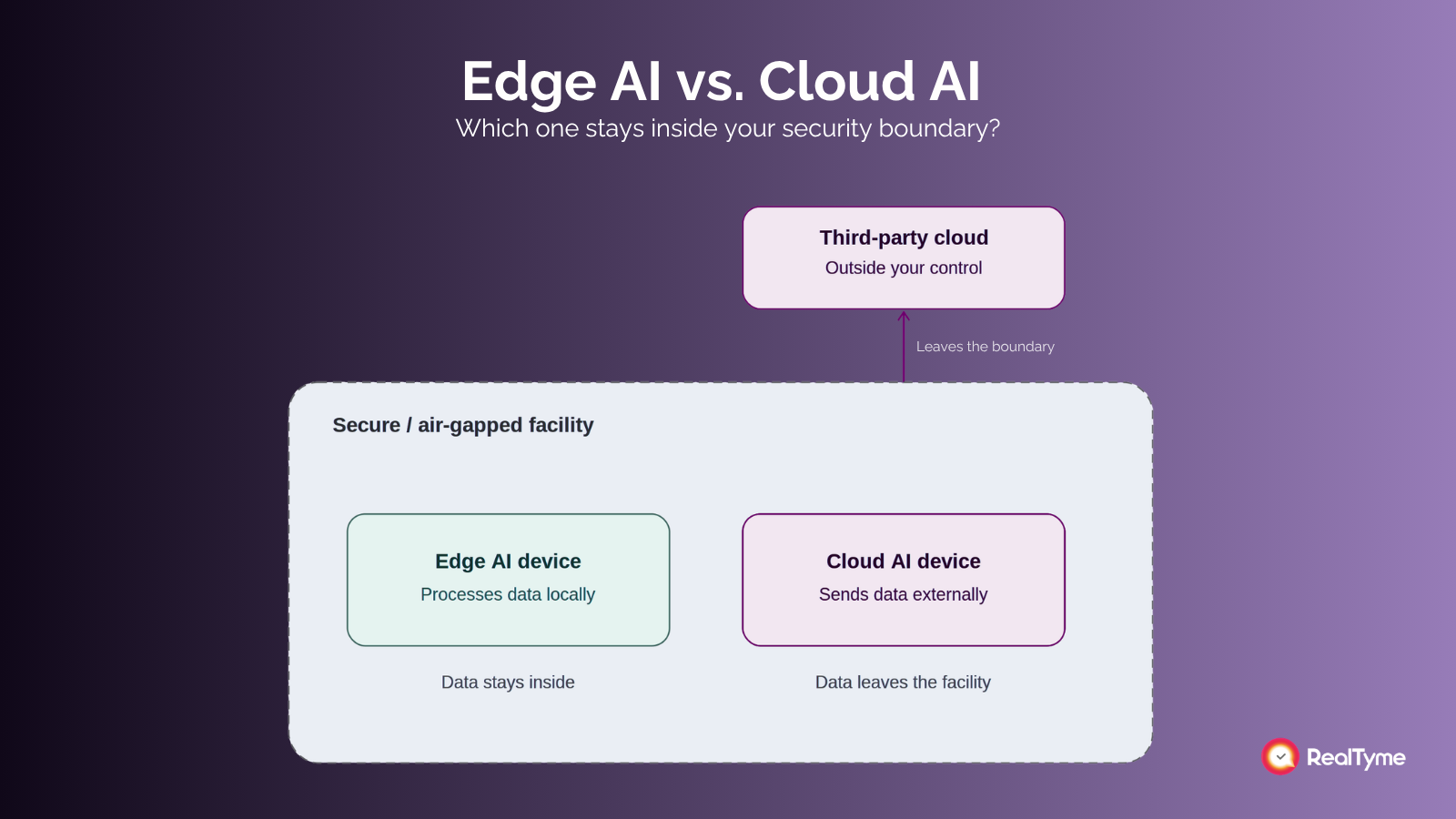
في البيئات المصنفة أو المعزولة (Air-gapped)، قد لا يُسمح بهذا الاتصال على الإطلاق. أما الذكاء الاصطناعي الطرفي فهو يشبه وجود ذلك الخبير بجانبك مباشرة، داخل نفس المنشأة الآمنة، قادراً على الإجابة فوراً دون الحاجة لإجراء أي اتصال خارج النطاق.
كيف يعمل الذكاء الاصطناعي الطرفي؟
لفهم كيفية عمل الذكاء الاصطناعي الطرفي، من المفيد مقارنته بنموذج الذكاء الاصطناعي السحابي التقليدي.
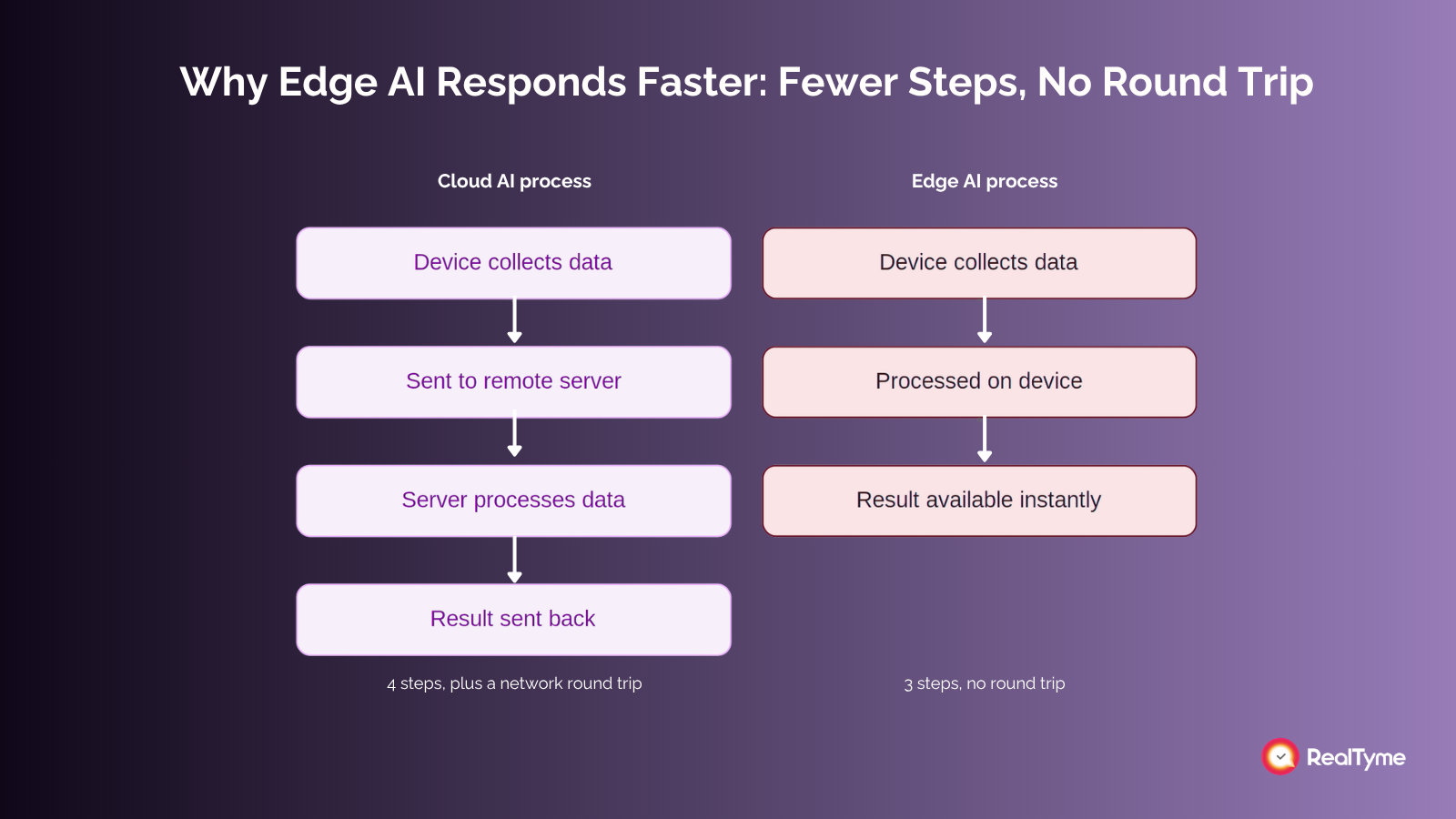
عملية الذكاء الاصطناعي السحابي التقليدية
1. يقوم جهاز (مثل مستشعر أو محطة طرفية) بجمع البيانات — صورة، أو تسجيل صوتي، أو قراءة مستشعر.
2. يتم إرسال تلك البيانات عبر شبكة إلى مركز بيانات بعيد.
3. تقوم الخوادم الموجودة في مركز البيانات بتشغيل نموذج الذكاء الاصطناعي ومعالجة البيانات.
4. يتم إرسال النتيجة مرة أخرى عبر الشبكة إلى الجهاز.
يعتمد هذا الأمر كلياً على اتصال شبكي مستقر ومصرح به ببنية تحتية لا تسيطر عليها المؤسسة عادةً، وهو بالضبط الاعتماد الذي يجعله غير مناسب للعديد من حالات الاستخدام السرية أو السيادية.
عملية الذكاء الاصطناعي على الحافة
1. يجمع الجهاز البيانات، تماماً كما كان يحدث من قبل.
2. يقوم نموذج الذكاء الاصطناعي — المثبت والمشغل بالفعل على الجهاز نفسه — بمعالجة البيانات فوراً وفي مكانها.
3. تصبح النتيجة متاحة لحظياً، دون نقل أي بيانات خارج الجهاز أو البيئة المحلية.
التحول الجوهري يكمن في مكان إجراء الحوسبة. في الذكاء الاصطناعي على الحافة، يعيش النموذج نفسه داخل الجهاز — سواء كان ذلك جهازاً ميدانياً، أو مستشعراً في شبكة، أو حاسوباً على متن مركبة، أو هاتفاً داخل منشأة آمنة — لذا فهو لا يحتاج أبداً إلى الوصول إلى ما هو خارج النطاق الذي يحميه.
أصبح الذكاء الاصطناعي على الحافة ممكناً بفضل التقدم المستمر في كل من الأجهزة (رقائق ذكاء اصطناعي مخصصة تتسم بالكفاءة الكافية للعمل على أجهزة أصغر) والبرمجيات (نماذج ذكاء اصطناعي مضغوطة للعمل ضمن قيود أجهزة أكثر صرامة دون فقدان الدقة المطلوبة). النتيجة العملية: قدرات كانت تتطلب سابقاً مركز بيانات أصبحت الآن قادرة على العمل داخل مركبة، أو حقيبة ميدانية، أو منشأة دون أي اتصال خارجي على الإطلاق.
الذكاء الاصطناعي على الحافة مقابل الذكاء الاصطناعي السحابي: الاختلافات الجوهرية
لا يوجد نهج "أفضل" عالمياً لكل عبء عمل، ولكن بالنسبة للأنظمة السرية أو المعزولة عن الإنترنت تحديداً، غالباً لا يكون الاختيار مفاضلة على الإطلاق، نظراً لأن الذكاء الاصطناعي السحابي قد لا يكون مسموحاً به ببساطة.
بالنسبة للاتصالات المشفرة تحديداً، لهذا القرار تبعات أمنية مباشرة — ونحن نحلل ذلك بعمق في الذكاء الاصطناعي على الجهاز مقابل الذكاء الاصطناعي السحابي: أيهما يحمي رسائلك المشفرة فعلياً؟
لماذا يعد الذكاء الاصطناعي على الحافة مهماً للحكومة والدفاع والبنية التحتية الحيوية؟
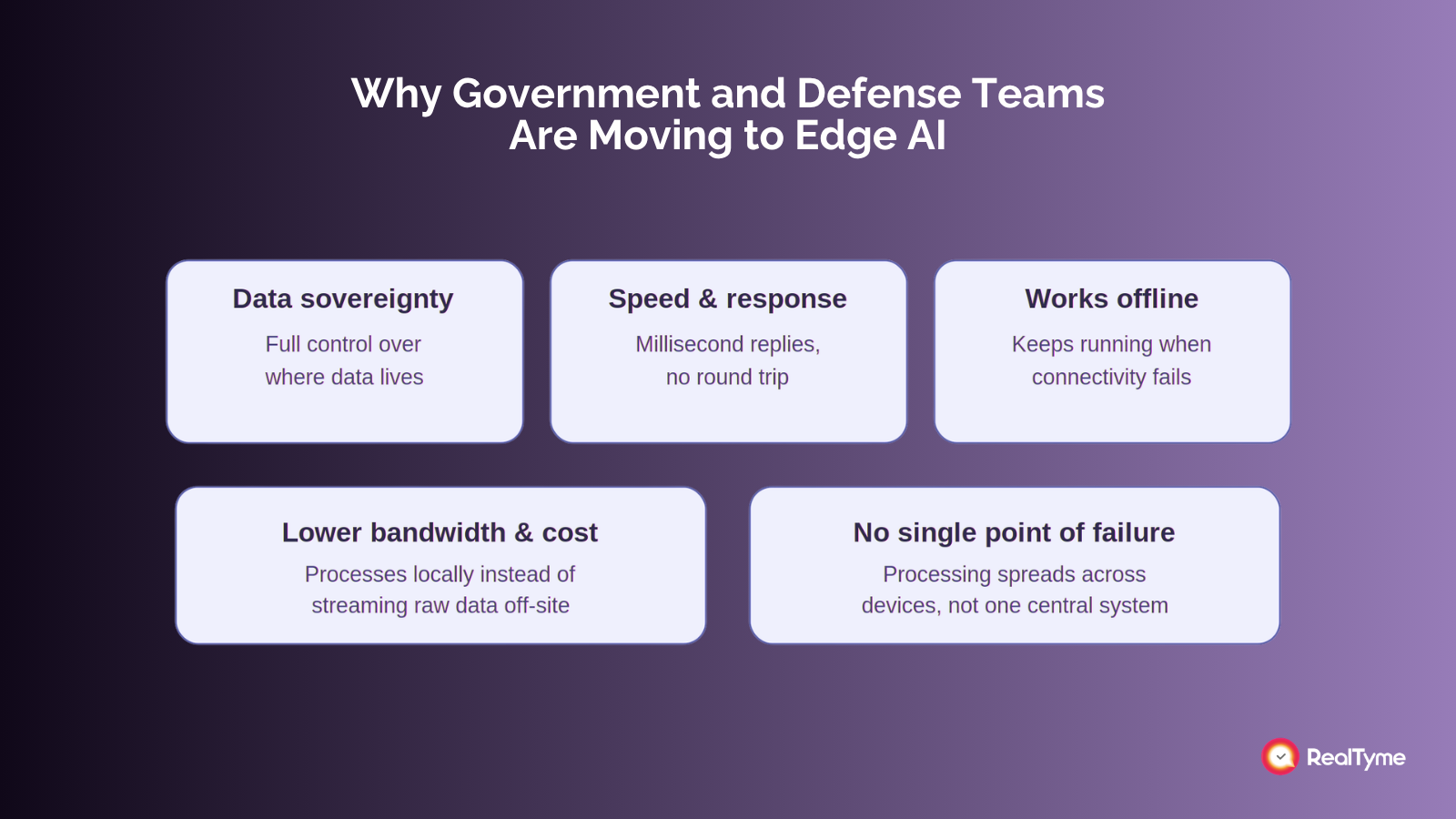
1. سيادة البيانات والتحكم القضائي
هذه هي الميزة الأكثر أهمية لهذا الجمهور، لذا يجدر بنا البدء بها. عندما تتم معالجة الذكاء الاصطناعي على الجهاز بدلاً من سحابة طرف ثالث، تحتفظ المؤسسة بالسيطرة الكاملة على مكان وجود بياناتها، ومن يمكنه الوصول إليها، والاختصاص القضائي الذي يحكمها.
لا توجد عمليات نقل عبر الحدود لتقييمها، ولا معالج فرعي تابع لجهة خارجية للتدقيق فيه، ولا اعتماد على بنية تحتية تقع خارج سيطرة المؤسسة نفسها.
إليك كيف يبدو ذلك من الناحية العملية: إذا قام مزود الذكاء الاصطناعي السحابي بتوجيه بياناتك عبر خوادم مقاول فرعي في بلد آخر لتشغيل النموذج — وهو إعداد شائع — فإن ذلك المقاول الفرعي وقوانين ذلك البلد يصبحان الآن جزءاً من مشهد الامتثال الخاص بك. يزيل الذكاء الاصطناعي على الحافة هذه السلسلة تماماً: لا وجود لمزود، ولا لمقاول فرعي، ولا لخادم أجنبي في الحلقة، لأن بياناتك لا تغادر الجهاز أبداً.
بالنسبة للبيئات المصنفة والمعزولة عن الإنترنت (air-gapped) تحديداً، لا يعد هذا مجرد ميزة، بل هو غالباً المسار الوحيد للامتثال. فإذا كان النظام مصمماً بحيث لا يمكنه الاتصال بأي شبكة خارجية، فإن الذكاء الاصطناعي السحابي ليس خياراً أضعف فحسب، بل هو ليس خياراً متاحاً من الأساس.
الذكاء الاصطناعي عند الحافة (Edge AI) هو ما يجعل القدرات المدعومة بالذكاء الاصطناعي ممكنة داخل تلك الحدود في المقام الأول. وهذا التمييز يهم أكثر المؤسسات التي تعمل بموجب اللائحة العامة لحماية البيانات (GDPR)، أو توجيه أمن الشبكات والمعلومات (NIS2)، أو قانون المرونة التشغيلية الرقمية (DORA)، أو التي تخضع لمتطلبات التصنيف الأمني الوطني، حيث تمثل كل خطوة تنتقل فيها البيانات خارج نطاق سيطرة المؤسسة نقطة خطر إضافية، وغالباً ما تُعد إخفاقاً في الامتثال بحد ذاتها.
وهذا هو المنطق ذاته الذي يستند إليه نهج RealTyme تجاه بنية تحتية للاتصالات السيادية وما بعد الكم بشكل أوسع: فكلما قلّت حاجة البيانات الحساسة للانتقال خارج بيئة خاضعة للتحكم — سواء كان ذلك لإدارة مفاتيح التشفير أو لمعالجة الذكاء الاصطناعي — صغرت مساحة الهجوم. مقالنا السابق حول تهديد "يوم ما بعد الكم" (Y2Q) واستراتيجية "الاعتراض الآن وفك التشفير لاحقاً" يستكشف زاوية ذات صلة: فالبيانات التي يتم اعتراضها وتخزينها اليوم قد تصبح مكشوفة بعد سنوات، بغض النظر عن مكان معالجة الذكاء الاصطناعي، ولهذا السبب فإن التحكم على مستوى البنية التحتية لا يقل أهمية عن أي ميزة منفردة.
2. السرعة والاستجابة الفورية
نظراً لعدم وجود حاجة لإرسال البيانات واستقبالها من خادم بعيد، يمكن للذكاء الاصطناعي عند الحافة الاستجابة في أجزاء من الثانية. وفي سياقات الدفاع والاستجابة للطوارئ، لا يقتصر الأمر على مجرد الراحة، بل إن تأخر الاستجابة في سيناريوهات العمليات الميدانية أو الأزمات له عواقب تشغيلية حقيقية.
3. العمل دون الحاجة لاتصال شبكي موثوق أو مسموح به
لا يتوقف الذكاء الاصطناعي عند الحافة عن العمل عند انقطاع الشبكة، كما أنه لا يتطلب اتصالاً بالشبكة قد لا يكون مسموحاً به في المقام الأول. وهذا أمر بالغ الأهمية للعمليات الميدانية، والاستجابة للكوارث، والمنشآت النائية، وأي عمليات نشر تكون فيها الاتصال ضعيفاً أو خاضعاً للقيود أو غير متاح عمداً.
4. خفض تكاليف النطاق الترددي والبنية التحتية
إن إرسال البيانات الخام المستمرة (خلاصات الفيديو، سجلات المستشعرات) إلى خارج الموقع أمر مكلف ويستهلك نطاقاً ترددياً كبيراً، وفي العديد من عمليات النشر الميدانية أو النائية، لا يتوفر النطاق الترددي المطلوب ببساطة. لذا، فإن المعالجة محلياً ونقل النتائج ذات الصلة فقط يقلل من هذا العبء بشكل كبير.
5. القابلية للتوسع دون وجود نقطة فشل واحدة
بدلاً من توجيه بيانات كل جهاز إلى نظام مركزي واحد، يتم توزيع المعالجة عبر الأجهزة نفسها. وبالنسبة لمشغلي البنية التحتية الحيوية، يعني هذا أيضاً أن انقطاع الشبكة أو تعرض النظام المركزي للاختراق لن يؤدي إلى توقف قدرة أي جهاز عن العمل.
أين يُستخدم الذكاء الاصطناعي عند الحافة (Edge AI) فعلياً في القطاعات الحكومية والدفاعية والبنية التحتية الحيوية
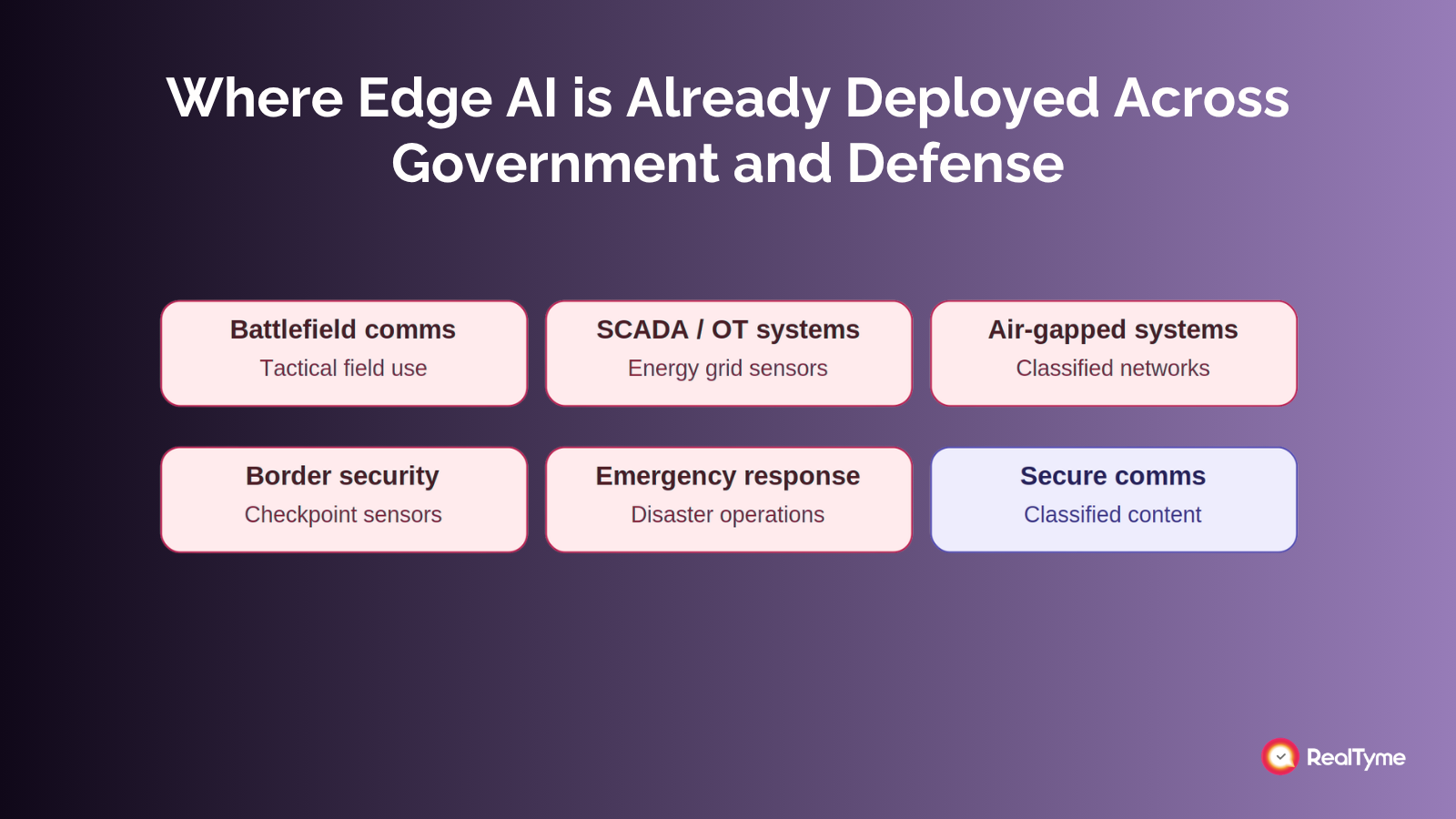
- الاتصالات الميدانية والتكتيكية: المحطات والأجهزة الميدانية التي تعالج البيانات محلياً عند ضعف الاتصال أو تعرضه للتشويش أو انعدامه تماماً.
- أنظمة التحكم الإشرافي وتحصيل البيانات (SCADA) وأنظمة التكنولوجيا التشغيلية (OT) في قطاعات الطاقة والمرافق: الكشف عن الشذوذ مباشرة عبر مستشعرات الشبكة، وضوابط معالجة المياه، وأنظمة التحكم الصناعية، حيث تكون رحلة البيانات إلى السحابة بطيئة للغاية ومحفوفة بمخاطر التعرض لشبكة خارجية.
- الشبكات المعزولة (Air-gapped) والسرية: الأنظمة المعزولة عمداً عن أي اتصال خارجي، حيث غالباً ما يكون الذكاء الاصطناعي عند الحافة هو البنية الوحيدة التي تسمح بوجود قدرات مدعومة بالذكاء الاصطناعي داخل هذه الحدود.
- أمن الحدود والمحيطات: تحليل المستشعرات والصور في الوقت الفعلي عند نقاط التفتيش ومحطات المراقبة، دون الحاجة إلى إرسال بيانات المراقبة إلى بنية تحتية تابعة لجهات خارجية.
- عمليات الطوارئ والاستجابة الأولية: المعالجة المحلية أثناء الاستجابة للكوارث، عندما يكون الاتصال ضعيفاً أو مدمرًا بالكامل.
- منصات الاتصالات الآمنة: تعتمد المؤسسات التي تتعامل مع محادثات سرية أو حساسة بشكل متزايد على الذكاء الاصطناعي عند الحافة (Edge AI) — ميزات داخل الجهاز مثل النسخ أو الترجمة أو التلخيص التي لا تمرر المحتوى أبداً عبر بنية تحتية سحابية تابعة لجهات خارجية.
(للعلم، يظهر هذا التحول نفسه في تكنولوجيا المستهلك اليومية أيضاً - مثل التعرف على الوجه داخل الهاتف الذكي، والمعالجة الصوتية المحلية في الأجهزة القابلة للارتداء - لكن المخاطر ومتطلبات الامتثال تختلف تماماً في البيئات السرية والمهام الحيوية.)
الذكاء الاصطناعي عند الحافة في البيئات المعزولة والسرية
بالنسبة للمؤسسات التي تعمل وفق متطلبات تصنيف معينة، لا يتمحور السؤال عادةً حول "هل يجب أن نستخدم الذكاء الاصطناعي الطرفي أم السحابي؟"، بل حول "هل يتطلب هذا العمل التشغيلي البقاء ضمن نطاق لا يمكن للذكاء الاصطناعي السحابي تجاوزه؟".
إن النظام المعزول (Air-gapped) هو نظام مفصول عمداً عن الشبكات الخارجية، بما في ذلك شبكة الإنترنت العامة، كإجراء أمني. وبحكم التعريف، فإن أي ميزة ذكاء اصطناعي تعتمد على استدعاء واجهة برمجة تطبيقات سحابية لا يمكنها العمل داخل هذا النطاق؛ فهي ليست مجرد تجربة محدودة، بل هي غير متاحة نهائياً. يحل الذكاء الاصطناعي الطرفي هذه المعضلة من خلال إبقاء النموذج بالكامل، وعملية الاستنتاج بأكملها، داخل نفس النطاق المادي والشبكي للبيانات نفسها.
لهذا الأمر تداعيات مباشرة على أطر الامتثال التي تتعامل بشكل متزايد مع توطين البيانات كمتطلب أساسي وليس مجرد تفصيل تقني:
- التعامل مع التصنيفات: لا يمكن عادةً معالجة البيانات المصنفة بمستوى معين على بنية تحتية لم يتم اعتمادها لهذا المستوى. فالذكاء الاصطناعي السحابي، حتى في عروض "السحابة السيادية"، يتطلب بنية تحتية وكوادر بشرية تحتاج إلى اعتماد منفصل. أما الذكاء الاصطناعي الطرفي، الذي يعمل بالكامل على أجهزة معتمدة مسبقاً، فيجنبك عبء الحصول على تلك الاعتمادات الإضافية.
- توجيهات NIS2 وDORA: تركز كلتا المبادرتين بشكل متزايد ليس فقط على تشفير البيانات، بل على مكان معالجتها والأطراف التي يمكنها الوصول إليها أثناء ذلك؛ وهو سؤال يجيب عليه الذكاء الاصطناعي الطرفي بشكل قاطع من خلال إبقاء المعالجة محلية.
- تقييمات نقل البيانات عبر الحدود: تتطلب معالجة البيانات عبر الذكاء الاصطناعي السحابي عادةً إجراء تقييم لأثر النقل إذا كانت البنية التحتية لمزود الخدمة تقع في ولاية قضائية مختلفة. يلغي الذكاء الاصطناعي الطرفي هذا التساؤل تماماً، نظراً لعدم حدوث أي عملية نقل للبيانات.
لا يعني هذا أن كل عمل تشغيلي للذكاء الاصطناعي في بيئات الحكومة أو الدفاع يجب أن يعمل عند الطرف (Edge)؛ فمن الممكن أن تكون أحمال العمل التي لا تتطلب تصنيفاً حساساً، والتي تعمل على بنية تحتية غير مصنفة، مناسبة تماماً للسحابة.
ولكن بالنسبة لمجموعة أحمال العمل التي تتطلب فعلياً معالجة معزولة أو مصنفة، فإن الذكاء الاصطناعي الطرفي ليس مجرد خيار تصميمي، بل هو البنية الوحيدة التي تلبي المتطلبات.
ما هو حجم سوق الذكاء الاصطناعي الطرفي، ولماذا ينمو بهذه السرعة؟
لقد تجاوز الذكاء الاصطناعي الطرفي مرحلة التجريب، وأصبح تبنيه من قبل القطاعات الحكومية والدفاعية جزءاً مهماً من هذا النمو:
- قُدِّرت قيمة سوق الذكاء الاصطناعي الطرفي العالمي بنحو 24.9 مليار دولار في عام 2025 ومن المتوقع أن ينمو ليصل إلى 118.7 مليار دولار بحلول عام 2033، بمعدل نمو سنوي مركب يبلغ حوالي 21.7%، وفقاً لـ جراند فيو ريسيرش.
- تتوقع جارتنر أن أكثر من ثلثي البيانات التي تديرها المؤسسات سيتم إنشاؤها ومعالجتها خارج مراكز البيانات أو السحابة بحلول عام 2028، وأن أكثر من ثلثي المؤسسات حول العالم ستعتمد تقنيات الذكاء الاصطناعي عند الحافة بحلول عام 2029، ارتفاعاً من 10% فقط في عام 2025 (وفقاً لـ ملخص ZEDEDA لتوقعات جارتنر لعام 2026).
- يعود هذا النمو إلى التوسع في الأجهزة المتصلة، وتزايد الطلب على المعالجة الفورية، وبشكل متزايد، إلى أولوية المؤسسات في التحكم في البيانات من خلال الذكاء الموضعي، وهو دافع يتماشى مباشرة مع متطلبات السيادة والتصنيف.
تحديات وقيود الذكاء الاصطناعي عند الحافة
لا يعد الذكاء الاصطناعي عند الحافة حلاً سحرياً، ومن المهم فهم المقايضات بوضوح، خاصة عند تقييم ادعاءات الموردين:
- محدودية قدرة المعالجة: تمتلك الأجهزة قدرة حوسبة أقل بكثير من مراكز البيانات المليئة بالخوادم، لذا قد لا تعمل نماذج الذكاء الاصطناعي الضخمة أو المعقدة للغاية بكفاءة على الجهاز نفسه. وبالنسبة لمعظم مهام الاتصال والتلخيص والتحليل المتعلقة بالعمليات الآمنة، نادراً ما يمثل هذا قيداً عملياً.
- قيود حجم النموذج: غالباً ما تحتاج نماذج الذكاء الاصطناعي إلى الضغط لتناسب الأجهزة الأصغر، وهو ما قد يعني أحياناً التضحية ببعض الدقة مقارنة بنسخها الكاملة القائمة على السحابة.
- تكاليف الأجهزة: قد تكون تكلفة الأجهزة القادرة على تشغيل الذكاء الاصطناعي محلياً أعلى في البداية مقارنة بالأجهزة الأبسط التي تكتفي بإرسال البيانات إلى السحابة، ومع ذلك، بالنسبة لعمليات النشر المصنفة، غالباً ما تكون هذه تكلفة حتمية لممارسة الأعمال وليست مقايضة اختيارية.
- تعقيد التحديث والصيانة: يتطلب تحديث نماذج الذكاء الاصطناعي عبر العديد من الأجهزة الموزعة، والتي قد تكون معزولة عن الشبكة، عملية تحديث مدروسة، نظراً لعدم وجود نظام مركزي واحد لإجراء التصحيحات.
نظراً لهذه المقايضات، تتبنى العديد من المؤسسات نهجاً هجيناً، حيث يتم تشغيل أعباء العمل السرية أو الحساسة زمنياً عند الحافة، مع تخصيص المعالجة غير السرية والأقل أهمية من حيث الوقت للسحابة.
هل الذكاء الاصطناعي عند الحافة مناسب لنشرك التقني؟ قائمة تحقق سريعة
قبل اتخاذ قرار بشأن مكان تنفيذ معالجة الذكاء الاصطناعي، اسأل نفسك:
1. هل يتضمن عبء العمل هذا بيانات سرية، أو خاضعة لرقابة التصدير، أو مقيدة قانوناً بطريقة أخرى؟ إذا كانت الإجابة نعم، فقد لا يكون الذكاء الاصطناعي السحابي خياراً مسموحاً به على الإطلاق، بغض النظر عن ادعاءات الأمان الخاصة بالمورد.
2. هل بيئة النشر معزولة عن الإنترنت (air-gapped)، أو تخضع لمتطلبات قانونية تتعلق بمكان إقامة البيانات؟ إذا كان الأمر كذلك، فإن قرار البنية التحتية قد اتُخذ بالفعل نيابة عنك.
3. هل سيؤدي الاعتماد على السحابة إلى خلق نقطة فشل واحدة أثناء الأزمات أو النزاعات أو انقطاع البنية التحتية؟ إذا كان فقدان الاتصال سيؤثر على المهمة، فإن الذكاء الاصطناعي عند الحافة يزيل هذا الاعتماد تماماً.
4. هل يتطلب إطار الامتثال الخاص بك إثبات موقع البيانات، وليس مجرد تشفيرها؟ تتطلب لوائح مثل NIS2 وDORA ومتطلبات التعامل مع التصنيفات بشكل متزايد معرفة مكان حدوث المعالجة، وليس فقط ما إذا كانت البيانات محمية أثناء النقل.
5. هل تتطلب المهمة استجابة فورية؟ إذا كان التأخير ولو لثانية أو ثانيتين سيؤثر على العمليات، فإن الذكاء الاصطناعي عند الحافة هو الخيار الأنسب بغض النظر عن العوامل الأخرى.
لا تختار معظم المؤسسات الذكاء الاصطناعي عند الحافة حصرياً لجميع أنظمتها، بل تقوم بمطابقة كل عبء عمل مع النموذج الذي يلبي متطلبات التصنيف والاتصال وزمن الاستجابة الخاصة به.
الذكاء الاصطناعي عند الحافة مقابل الذكاء الاصطناعي على الجهاز: هل هما الشيء نفسه؟
غالباً ما يتم استخدام هذين المصطلحين بالتبادل.
من الناحية الفنية، "الذكاء الاصطناعي عند الحافة" هو الفئة الأوسع، فهو يغطي الذكاء الاصطناعي الذي يعمل على أي جهاز عند حافة الشبكة، بدءاً من مستشعر ميداني وصولاً إلى خادم موجود داخل منشأة آمنة.
يصف "الذكاء الاصطناعي على الجهاز" بشكل أكثر تحديداً الذكاء الاصطناعي الذي يعمل مباشرة على جهاز المستخدم النهائي، مثل الهاتف المحمول أو الجهاز الطرفي الميداني.
من الناحية العملية، يصف كلاهما التحول الجوهري نفسه: نقل معالجة الذكاء الاصطناعي بعيداً عن البنية التحتية السحابية المركزية إلى داخل النطاق الذي تسيطر عليه المؤسسة فعلياً.
الأسئلة الشائعة
ما المقصود بالذكاء الاصطناعي الطرفي (Edge AI) ببساطة؟
يعني الذكاء الاصطناعي الطرفي تشغيل تقنيات الذكاء الاصطناعي مباشرة على الجهاز المحلي — مثل المستشعرات أو المحطات الطرفية أو الهواتف — بدلاً من إرسال البيانات إلى خادم سحابي لمعالجتها في مكان آخر.
هل يمكن تشغيل الذكاء الاصطناعي الطرفي في بيئة معزولة تماماً أو سرية؟
نعم، فهذه إحدى المزايا الرئيسية للذكاء الاصطناعي الطرفي في القطاعات الحكومية والدفاعية. ولأن النموذج وعملية الاستنتاج يعملان بالكامل على أجهزة محلية معتمدة مسبقاً دون الحاجة إلى اتصالات شبكية خارجية، يمكن للذكاء الاصطناعي الطرفي العمل ضمن نطاق لا يمكن للذكاء الاصطناعي السحابي تجاوزه بحكم طبيعته.
كيف يؤثر الذكاء الاصطناعي الطرفي على الامتثال التنظيمي للمؤسسات الحكومية والدفاعية؟
يعمل الذكاء الاصطناعي الطرفي على تبسيط الامتثال بعدة طرق ملموسة: فهو يلغي الحاجة إلى تقييمات أثر نقل البيانات عبر الحدود (لعدم وجود أي عملية نقل)، ويتجنب أعباء الاعتماد الإضافية للبنية التحتية السحابية وموظفيها، كما يلبي متطلبات توطين البيانات في أطر عمل مثل NIS2 وDORA التي تركز بشكل متزايد على مكان إجراء المعالجة، وليس فقط على ما إذا كانت البيانات مشفرة.
ما هي الصناعات والقطاعات الأكثر تبنياً للذكاء الاصطناعي الطرفي؟
بعيداً عن تطبيقات المستهلكين، تُعد القطاعات الحكومية والدفاعية والطاقة والمرافق (أنظمة SCADA/OT) ومشغلو البنية التحتية الحيوية من بين الأسرع في تبني هذه التقنية، ويرجع ذلك إلى حد كبير لمواجهتهم قيوداً تتعلق بالاتصال أو التصنيف الأمني أو زمن الاستجابة التي لا يمكن للذكاء الاصطناعي السحابي وحده تلبيتها.
هل الذكاء الاصطناعي الطرفي أكثر أماناً من الذكاء الاصطناعي السحابي؟
بالنسبة لأحمال العمل الحساسة في القطاعات الحكومية والدفاعية، الإجابة هي نعم بشكل عام من حيث الجانب الأكثر أهمية: البيانات لا تغادر البيئة الخاضعة للتحكم أبداً، مما يزيل مخاطر التعرض المرتبطة بالبنية التحتية لأطراف خارجية، والمعالجات الفرعية، وعمليات النقل عبر الولايات القضائية. صحيح أنه يطرح اعتباراً مختلفاً — حيث يصبح الجهاز نفسه هو العنصر الذي يجب حمايته — ولكن بالنسبة لحالات الاستخدام السرية والمعزولة، فإن هذه المقايضة غالباً ما تكون مفضلة على بديل عدم القدرة على معالجة البيانات نهائياً.
هل تحتاج المؤسسات إلى أجهزة خاصة لنشر الذكاء الاصطناعي الطرفي؟
بالنسبة لأحمال العمل المكثفة والمستمرة — مثل التحليل المستمر للمستشعرات في الشبكات أو المعالجة الدائمة عبر الأجهزة الميدانية — عادة ما يتطلب الأمر أجهزة طرفية مصممة خصيصاً ومزودة بمسرع ذكاء اصطناعي مخصص. وتأخذ عمليات الشراء الحكومية والدفاعية هذا الأمر في الحسبان كجزء من التكلفة الإجمالية للنشر، نظراً لأن البديل (الذكاء الاصطناعي السحابي) قد لا يكون مسموحاً به لحمل العمل المعني.
تابع السلسلة
يُعد هذا الدليل بمثابة الأساس المبسط للموضوع. إذا كانت مؤسستك تقيم ما يعنيه الذكاء الاصطناعي الطرفي لنشر تقنيات في بيئة سرية أو سيادية أو خاضعة لرقابة صارمة، فهذه هي المشكلة التي تعالجها المقالتان التاليتان:
- التشفير من طرف إلى طرف مقابل الذكاء الاصطناعي: هل يمكن للمراسلات المشفرة ومساعدي الذكاء الاصطناعي التعايش معاً؟ — لماذا تكسر معظم ميزات الذكاء الاصطناعي التشفير من طرف إلى طرف بحكم تصميمها، وما هو السؤال المعماري الذي يجب على كل فريق أمني طرحه قبل الموافقة على منصة مراسلة مدعومة بالذكاء الاصطناعي.
- الذكاء الاصطناعي على الجهاز مقابل الذكاء الاصطناعي السحابي: أيهما يحمي رسائلك المشفرة حقاً؟ — اختبار ضغط للحوسبة السرية (TEEs)، وما توصلت إليه عمليات التدقيق الأمني المستقلة عند فحصها، وما يعالجه الذكاء الاصطناعي على الجهاز وما يعجز عن إصلاحه.


.svg)
.svg)

.svg)
.svg)
