Secure Messaging Predictions for 2026: Secure Messaging Trends Shaping Trust, Governance, and the Future of Critical Communications

Secure messaging has entered a new phase.
For years, communication tools were selected primarily on the basis of convenience and adoption. If people used them willingly and messages moved quickly, the assumption was that productivity had been solved.
Security, when considered at all, was often reduced to a single question: Is it encrypted?
As 2026 approaches, that framing no longer holds. Across government, public agencies, and critical infrastructure sectors, messaging has become inseparable from governance, resilience, and institutional trust. Decisions with national, economic, and societal impact are increasingly made, discussed, or coordinated through messaging platforms. That reality has elevated secure messaging from a technical feature to a strategic concern.
The secure messaging trends emerging today reflect this shift. They point toward a future in which communication systems are treated not as neutral pipes, but as critical systems that shape how institutions function under pressure. The future of secure messaging will be defined by how well it supports accountability, protects trust, and adapts to long-term threats, including post-quantum risks, while remaining usable in real-world operations.
Secure Messaging as Critical Infrastructure, Not Convenience Technology
Secure messaging has quietly become one of the most heavily relied-upon operational layers in modern institutions. Emergency response coordination, inter-agency collaboration, infrastructure maintenance, healthcare delivery, and public-facing services all increasingly depend on fast, informal communication channels.
In many cases, messaging is where context is shared, intent is clarified, and action is initiated. It fills the gaps between formal systems and documented processes. That flexibility is precisely what makes it valuable, but also what makes it risky.
Unlike traditional systems of record, secure messaging platforms were rarely designed with long-term accountability, jurisdictional control, or adversarial threat models in mind. Yet they are now used to coordinate activities where failure, misinterpretation, or compromise can have real-world consequences.
By 2026, one of the most important secure messaging trends will be the formal recognition of messaging as operational infrastructure. Not infrastructure in the narrow technical sense, but in the institutional sense: systems that must remain trustworthy, available, and governable even under stress.
This recognition fundamentally changes how secure messaging is evaluated. Questions of uptime, integrity, identity assurance, and continuity begin to matter as much as usability. Messaging choices become risk decisions.
Why Consumer Messaging Apps No Longer Fit High-Stakes Environments
The widespread use of popular consumer messaging apps in professional contexts is understandable. They are familiar, frictionless, and deeply embedded in everyday behavior. In moments of urgency, people gravitate toward tools they already know.
However, one of the clearest secure messaging trends leading into 2026 is a growing acknowledgment that consumer-grade messaging platforms are poorly suited for government and critical-sector use, regardless of how strong their encryption claims may be.
Consumer messaging apps are optimized for personal communication. Their design assumptions prioritize ease of onboarding, global reach, and informal interaction. They are not built to support institutional governance, regulated workflows, or long-term accountability. Identity is often tied to phone numbers or consumer accounts rather than verified organizational roles. Access lifecycle management is limited or nonexistent. Policy enforcement, data residency, and auditability are typically outside the control of the institution using the tool.
In environments where communications may later be scrutinized, investigated, or relied upon as evidence of due process, these limitations matter. Encryption alone does not address them.
As the future of secure messaging unfolds, reliance on consumer messaging apps for sensitive or operational communication will increasingly be seen as a structural risk. Not because those tools are inherently insecure, but because they were never designed to carry the weight that institutions are placing on them.
From Encryption To Trust Systems
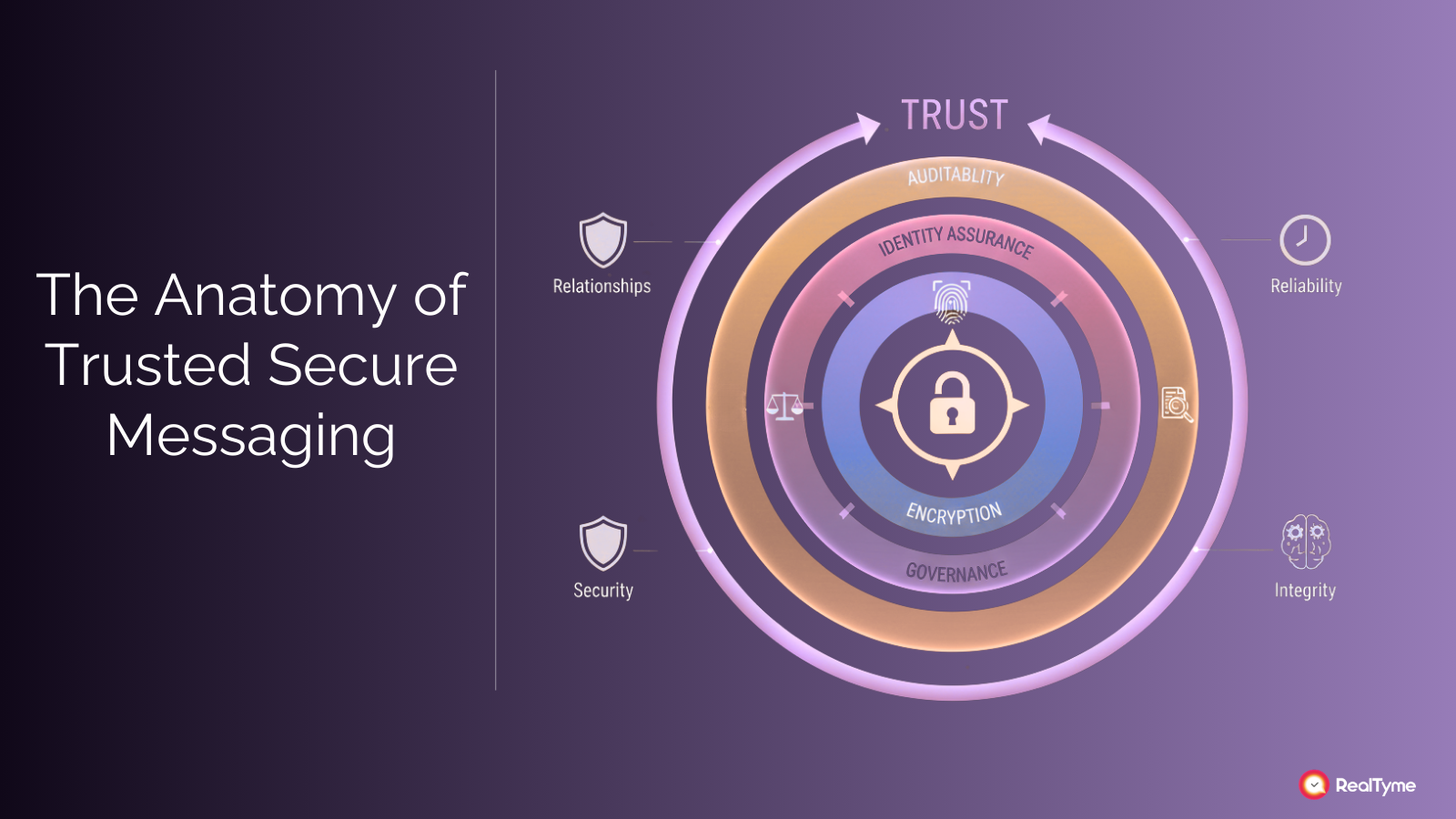
Encryption remains a foundational requirement for secure messaging. It protects confidentiality and reduces the risk of interception. But encryption answers only one part of a much larger question: Can this communication be trusted?
Secure messaging trends for 2026 suggest a shift from encryption-centric thinking toward trust-centric design. Trust, in this context, encompasses several dimensions. It includes assurance that messages cannot be altered or forged. It includes confidence that participants are who they claim to be. It includes clarity about how information can be shared, retained, or audited. And it includes the ability to demonstrate these properties to oversight bodies without exposing sensitive content unnecessarily.
In government and critical sectors, trust is not abstract. It underpins legitimacy, continuity, and public confidence. A messaging platform that cannot support trust at this level becomes a liability, regardless of how strong its cryptography may be.
Identity Assurance as the Backbone of Secure Messaging
Many of the most damaging incidents involving messaging in recent years have not resulted from broken encryption. They have resulted from impersonation, account takeover, or misplaced trust in compromised identities.
This reality is reshaping the future of secure messaging. Identity assurance is moving to the center of secure communication design. Strong identity binding between users, devices, and institutional roles is increasingly seen as essential. So is the ability to detect and respond to anomalies that suggest impersonation or misuse.
In public-sector and critical-infrastructure contexts, the consequences of a trusted identity being misused can be severe. False instructions, unauthorized approvals, or misleading information can propagate quickly through informal channels. Secure messaging systems that treat identity as a first-class security property are better equipped to mitigate these risks.
This represents a clear departure from consumer messaging models, where identity is often informal, portable, and weakly bound to institutional authority.
Governance Without Surveillance
One of the most sensitive challenges in secure messaging is balancing governance with privacy. Public institutions and regulated operators must be able to demonstrate compliance, support lawful oversight, and investigate incidents. At the same time, they have obligations to protect individual privacy, civil liberties, and workforce trust.
Secure messaging trends leading into 2026 reflect a growing emphasis on privacy-preserving governance. Rather than granting broad access to message content, modern approaches focus on scoped visibility, proportional access, and clear separation of duties. Oversight mechanisms are designed to activate when justified, not to operate continuously.
This evolution is particularly important in government environments, where the legitimacy of security measures depends not only on effectiveness, but on restraint. Messaging systems that blur the line between security and surveillance risk undermining the very trust they are meant to protect.
The future of secure messaging will favor platforms that make governance explicit, auditable, and limited by design.
Messaging Policies That Adapt to Context
Another defining secure messaging trend is the move away from rigid, one-size-fits-all restrictions. Blanket bans on attachments or external communication often fail in practice, especially in environments where collaboration across organizational boundaries is essential.
By 2026, policy-driven messaging that adapts to context will be increasingly common. Rather than blocking entire categories of behavior, systems will apply protections dynamically based on factors such as sensitivity, participants, and risk level.
This approach aligns well with the operational realities of government and critical sectors. It allows necessary communication to continue while reducing exposure in higher-risk scenarios. Importantly, it also reduces the incentive for users to bypass approved tools in favor of consumer messaging apps.
Secure Messaging Beyond Text
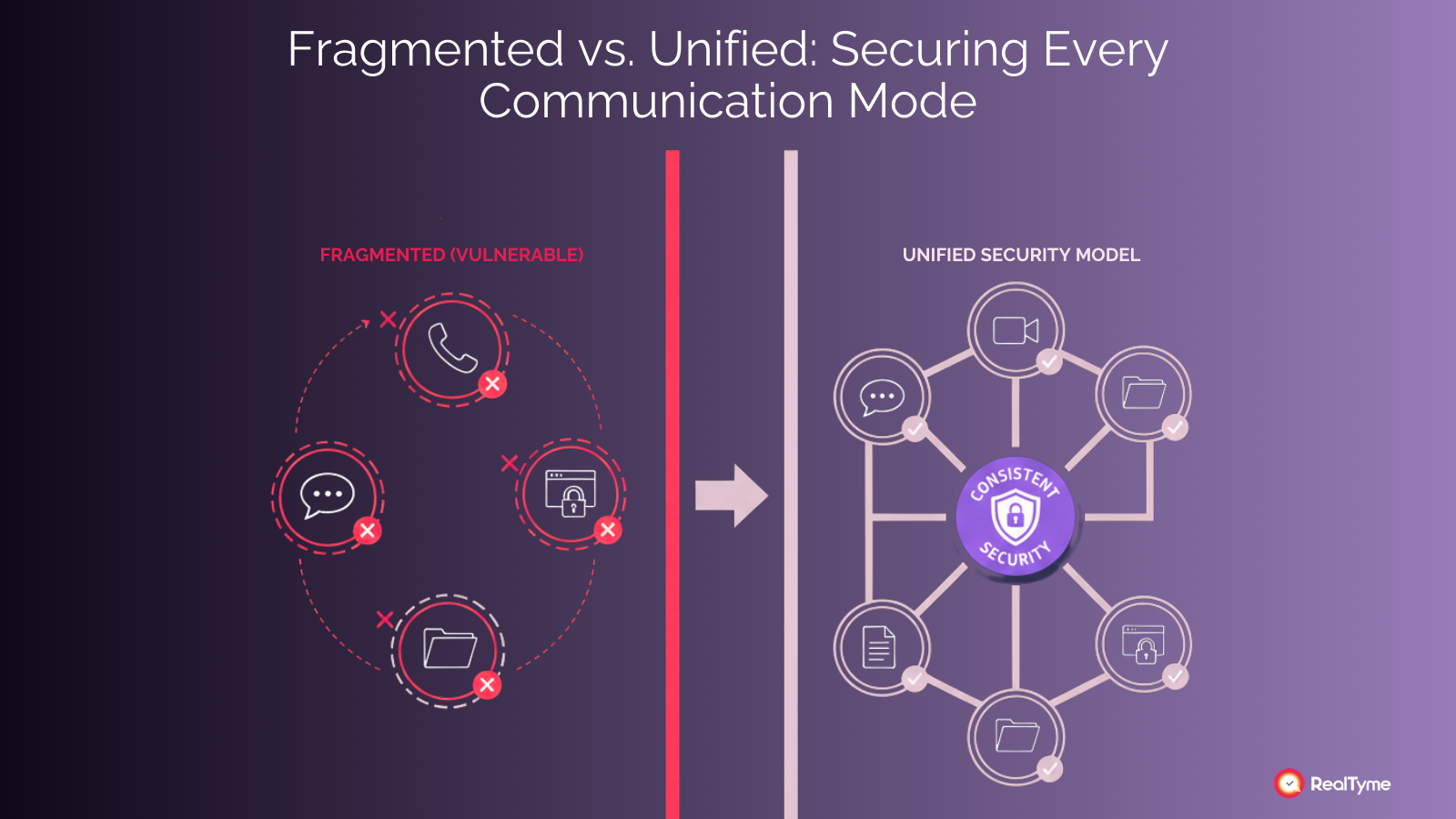
Text messaging is only one part of modern communication. Voice notes, files, images, video calls, and shared documents are all integral to how work gets done, particularly in distributed or hybrid environments.
The future of secure messaging recognizes this reality. Protection must extend across the full communication workflow. Files shared in a secure conversation should be subject to the same policies and controls as the messages themselves. Voice and video interactions should offer the same assurance of participant identity and integrity.
For institutions managing sensitive operations, fragmented security across different communication modes creates gaps that adversaries can exploit. Secure messaging platforms that offer consistent protection across media will be better suited to these environments.
Artificial Intelligence as a Support Layer, Not a Watcher
Artificial intelligence is becoming part of the secure messaging conversation, but its role is still being defined. In sensitive environments, there is understandable caution about introducing systems that might appear to monitor or analyze communications indiscriminately.
Secure messaging trends for 2026 suggest that AI will be most successful when used to support prevention and resilience, rather than passive observation. This includes helping identify patterns consistent with impersonation, warning users before sensitive information is exposed, and assisting in incident response workflows.
Crucially, adoption will favor AI systems that are transparent in their operation, minimize data retention, and operate under clear governance frameworks. AI that enhances human judgment, rather than replacing it, aligns more closely with the values and constraints of public institutions.
External Secure Messaging and Public Trust
Secure messaging is no longer purely an internal concern. Citizens, patients, customers, and partners increasingly interact with institutions through digital channels, often sharing sensitive information.
As awareness of fraud, impersonation, and data misuse grows, expectations are changing. Secure, verifiable communication is becoming part of how institutions demonstrate responsibility and competence.
By 2026, offering secure external messaging channels will be seen as a marker of institutional maturity. It signals that an organization takes the protection of sensitive information seriously and is willing to invest in communication systems designed for trust, not just convenience.
Consumer messaging apps struggle to meet this expectation at scale, particularly where verification, governance, and accountability are required.
Metadata as a First-Class Security Concern
Even when message content is encrypted, metadata can reveal operationally sensitive information. Patterns of communication, frequency, timing, and relationships can all be valuable to adversaries.
Secure messaging trends are increasingly acknowledging this reality. While eliminating metadata entirely is impractical, reducing unnecessary collection and protecting what remains is becoming part of secure design.
For government and critical-sector organizations, this is particularly relevant. Operational patterns can reveal vulnerabilities, readiness levels, or strategic priorities. Messaging systems that treat metadata with the same care as content offer stronger protection against long-term intelligence gathering.
Post-Quantum Cryptography: From Abstract Risk To Concrete Planning

Perhaps the deepest and most long-term secure messaging trend shaping the future is the shift toward post-quantum readiness.
Large-scale quantum computers capable of breaking widely used public-key cryptography are not yet operational. However, the risk they pose is not confined to the future. Adversaries can collect encrypted communications today with the intention of decrypting them later, once quantum capabilities mature. This “harvest now, decrypt later” strategy is particularly concerning for communications that must remain confidential for decades.
Communications that remain sensitive for 10, 20, or 30 years must be protected against future decryption capabilities today. Secure messaging platforms that are not designed for cryptographic transition may create long-term exposure that is difficult to reverse.
For government and critical infrastructure organizations, many communications fall into this category. Policy discussions, infrastructure designs, security procedures, and personal data may all have long-lived sensitivity.
Planning for Cryptographic Transition
By 2026, post-quantum considerations will increasingly influence secure messaging decisions. This does not mean immediate deployment of post-quantum algorithms across all systems, but it does mean prioritizing cryptographic agility. Messaging platforms must be able to evolve their cryptography without disruptive redesign or loss of trust.
Consumer messaging apps offer little transparency or control over their cryptographic roadmaps. In contrast, systems designed for institutional use can be evaluated on their ability to transition as standards mature.
The future of secure messaging belongs to platforms that are designed with this transition in mind, recognizing that cryptography is not static, and that long-term trust depends on adaptability.
Governance, Procurement, and Accountability in the Next Phase
As secure messaging becomes more tightly linked to governance and resilience, procurement and oversight practices will evolve. Decision-makers will increasingly ask not only whether a platform is secure today, but whether it can support future regulatory, technological, and threat-driven change.
Questions around data sovereignty, jurisdictional control, and transparency will become more prominent. Messaging systems will be expected to integrate with existing identity and governance frameworks rather than operating as isolated tools.
This trend aligns with a broader shift toward viewing digital systems as extensions of institutional authority. Secure messaging is no exception.
Usability as a Condition for Security
Despite all of these deep shifts, one principle remains constant: security that people do not use does not protect anything.
The future of secure messaging depends on aligning protection with real operational behavior. Systems must be intuitive enough to be used under pressure, clear enough to inspire trust, and flexible enough to support diverse workflows.
This is particularly important in government and critical sectors, where users range from technical specialists to frontline staff and external partners. Secure messaging that demands constant workarounds will inevitably be bypassed, often in favor of consumer apps.
The secure messaging trends that endure will be those that make secure behavior the natural choice.
Preparing for 2026 and Beyond
Organizations that operate in public, regulated, and critical environments can begin preparing now by reframing how they think about secure messaging. Rather than asking whether a tool is popular or convenient, they can ask whether it supports trust, governance, and resilience.
They can examine where consumer messaging apps have become embedded in sensitive workflows and assess the risks that creates. They can prioritize communication platforms that offer institutional control, cryptographic agility, and policy-driven protection. And they can plan for a future in which messaging is scrutinized as closely as any other critical system.
Final Perspective: Secure Messaging as a Foundation of Institutional Trust
The secure messaging trends shaping 2026 reflect a broader realization. Communication systems are no longer peripheral. They influence how institutions make decisions, respond to crises, and earn public confidence.
The future of secure messaging belongs to platforms designed for environments where trust is non-negotiable. Not adapted from consumer use cases, but built with governance, resilience, and long-term security in mind, including preparation for post-quantum realities.
Organizations that continue to rely on popular consumer messaging apps for sensitive communication will increasingly find themselves exposed, not because those tools failed, but because they were never meant to carry this responsibility.
Those that invest in secure, governed messaging today will be better positioned to navigate uncertainty tomorrow.
Secure communication is no longer a matter of convenience. It is a matter of trust, resilience, and responsibility.
RealTyme is built for organizations that cannot rely on consumer messaging apps, offering secure, governed communication designed for public institutions and critical sectors, today and into the future.
Start a free trial to see how secure messaging can work in your environment, or contact our team to discuss your security, governance, and post-quantum readiness requirements.



.svg)
.svg)

.svg)
.svg)
